How much does a trip to Japan cost?
Not an easy answer, because Japan is so many regions, so many different types of travel are possible. I will try to summarize the general expenses and the tips that can serve more or less for all the regions, and it will allow you to know how much a trip to Japan costs.
As I explain in my Tips for Planning a trip to Japan , one of the first things to do when you want to travel to Japan is to start reading about that country, and choose the region you want to cover. Based on this, you will be able to organize the rest. There is a lot to see and I do not recommend doing many cities or more than two regions if the trip lasts less than 15 days.
1. Requirements for a trip to Japan
Most travelers do not need a visa to enter Japan for short stays. Citizens of all European countries, the United States, and several Latin American nations (for example, Uruguay) can enter visa‑free for tourism.
However, some nationalities do require a visa, including Peru, Brazil, Bolivia, Ecuador, Paraguay, Venezuela, Colombia, Pakistan, South Africa, China, and India. If your passport is on the visa‑required list, make sure to factor in the extra time and cost.
You can check the full, updated list directly on the website of the Ministry of Foreign Affairs of Japan.
A single‑entry visa costs 3,000 yen (around 20 USD), and with the yen currently very weak, Japan is more affordable than ever — from accommodation to food to transportation.
2. How to travel to Japan? How much cost a flight ticket to Japan and when to travel?
The answer to that question will depend on where you are. Most likely you will not have a direct flight unless you are flying from a main city and on which side of the planet you are.
The 2 main international airports that you can reach are Tokyo and Osaka. I recommend this last airport if you want to visit the Kyoto region and its surroundings.
To find out the prices of flight tickets to Japan, use Google Flights which will allow you to know the best combinations of dates and airports, and calculate the price of your flight.
When is the best season to travel to Japan? To get the best prices
Basically, you could travel all year round if the budget is not a problem for you, in Japan, each season has its charm. A trip to Japan costs more or less depending on the date, prices are very variable, even from one day to another in the same month.
If you want to save, avoid the beginning of spring, which is the cherry blossom season and everything costs more. Pay attention to the national or local holidays, local people travel a lot inside the country.
You should also see the dates of certain festivals in some areas, which will cause your accommodation to go up in price. If you want to enjoy these festivals and balance your budget, you should perhaps choose the less known ones, which will be just as good as the more famous ones. Or divide your stay between the days of the festival and the days before or after the event. We stayed at Kanazawa at the beginning of its festival, and we enjoyed some events, but we didn’t pay a lot because we didn’t stay all the week of the festival.
3. How to travel inside Japan? How to move from one region to another?
Moving around Japan is surprisingly easy, and the train is by far the most efficient and comfortable way to travel between cities and regions.
One of the most popular options is the Japan Rail Pass (JR Pass), which can be purchased as a national pass or as regional passes depending on the areas you plan to visit. All passes are available for 7, 14, or 21 days, and prices vary according to duration and coverage.
The national JR Pass starts at around 280 USD for 7 days, while regional passes are often much cheaper and can be a great deal if you’re focusing on a specific area. I’ve personally used regional passes several times, and they work extremely well.
Some of the most common regional passes include:
Kansai Region
Hokkaido Region
JR West
JR East & Shikoku
JR Central
Regional passes can start at around 22 USD for 1 day, depending on the area and type of trains included.
To calculate the exact price of your pass and compare options, I recommend checking the official site: Japan Rail Pass.
Keep in mind that regional passes do not cover all trains, unlike the national pass. Always check which lines and train types are included—don’t worry, it sounds more complicated than it is. Buses are not included. We made this mistake ourselves, because we assumed the regional pass covered regional buses — but it only includes extra‑urban buses, not city buses.
Important update: Hyperdia no longer works.
Hyperdia used to be the go‑to website for planning train routes in Japan, but it stopped providing timetable searches in 2022.
Instead, use one of these reliable alternatives:
Google Maps – excellent for real‑time routes and schedules
Japan Travel by Navitime – very detailed, great for JR Pass users
Jorudan (Japan Transit Planner) – ideal for checking JR Pass‑friendly routes
If you want to save money, avoid booking Green Cars (first‑class wagons), as they make the pass significantly more expensive.
ATTENTION: you have to buy the pass before traveling to Japan. You can do it on Internet in your country, and receive it by mail.
4. How much does cost accommodation in Japan?
First of all, you have to know the difference between the types of accommodation available in Japan. These will be the same throughout the entire country.
Prices will vary essentially with 3 things: the city, the date (whether it is a local holiday or not), and the size of the room (space in Japan costs a lot).
Types of Accommodation in Japan
The Ryokan
A ryokan is a traditional Japanese accommodation, usually set in classic wooden houses with tatami‑mat rooms and futons laid out directly on the floor. It’s a very different way of sleeping, but that’s part of the charm.
Ryokan come in all levels — from simple and homey to incredibly luxurious — though in general they tend to be on the expensive side. Many of the higher‑end ones include kaiseki dinners, which are beautifully presented multi‑course meals that feel like a cultural experience in themselves.
For me, staying in a ryokan is one of those truly unique experiences you can only have in Japan. If your budget allows it, I absolutely recommend trying at least one night. It’s unforgettable.
Apartments or Houses
It is an option that should not be neglected if you want to save money. There are very good offers, and the apartments are super well equipped.
In general, they are found through a specialized agency, or even via booking. Verify that you can communicate correctly with the owner. Not a lot of people speak enough English.
Hostels
There are many hostels in Japan, I remember that the first time I was looking for accommodation, I constantly came across these. Be careful, they are listed as hotels on many travel sites.
You will share the room with other people, and they have common bathrooms.
There are different levels of hostels, some are almost luxury hostels (with bathroom shared).
Capsule Hotels
Something that really characterizes Japan — and that many travelers try at least once just for the experience — are capsule hotels. They’re basically individual sleeping pods (hence the name), often used by commuters or people traveling for work. The capsules are just for sleeping, and the bathrooms and common areas are shared.
If you’re claustrophobic, be warned… this is definitely not the place for you. I personally couldn’t do it, but a lot of people love the novelty.
Business Hotels
They are quite good and pragmatic hotels, but without great decorative gadgets, or great touristic efforts.
Their name comes from the fact that they are used by businessmen when they are traveling.
Their prices are usually quite interesting; and you can find real jewels.
Hotels in general
An advantage of Japan is that you can find very good hotels at medium prices, many times the stars do not give all the answers.
I have known hotels worthy of 5 stars with only 3.
The good thing about Japan is the cleanliness, but always check something that is a bit particular, check that your room has a window, yes! incredible, but sometimes they are very cheap just because they do not have one.
Now what matters most, let’s go to prices.
Cheap accommodation – from € 20
Hostels will be located here, some capsule hotels as well.
You don’t have to expect much from these accommodations, but you will most likely have a clean place to sleep, hey look! it’s Japan, and almost everything is very clean, although sometimes there are negative exceptions. But if you do not mind much sharing a bathroom, or not having great comforts apart from a bed, and a place to prepare food, this type of accommodation is made for you.
An example of capsule hotel: The Millenials Kyoto
An example of a hostel: Grids Hotel-Hostel
As you can see, there are beautiful things in these cheap accommodation alternatives to organize a trip to Japan with a reduced budget, by searching well you will be able to find what best suits your trip.
Budget Accomadation – From 35€
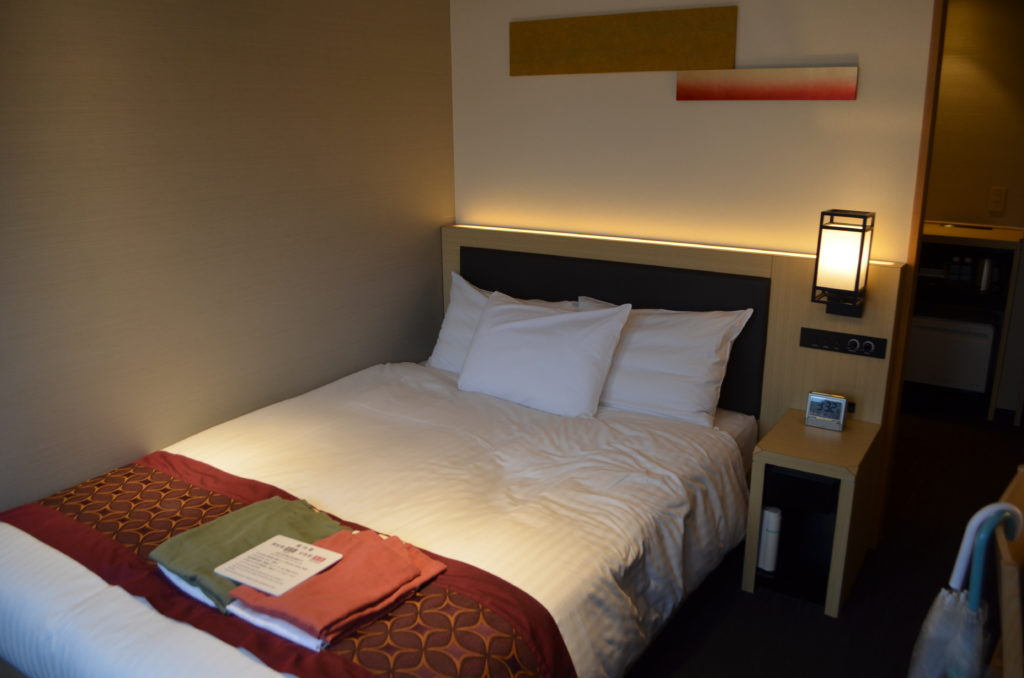
Some business hotels will be located here. During a trip to Japan, choosing this type of hotel can be a way to save on accommodation and reduce a big part of costs.
Hotel rooms will not cost the same if it is for one or more people; even if you stay in the same room type.
Among the Business Hotels, look for those of the APA Chain. You can find real gems. Here are some examples:
APA Ekihigashi in Kyoto
Medium accommodation – from € 70
Here the choice begins to get complicated. There are many; but many accommodations.
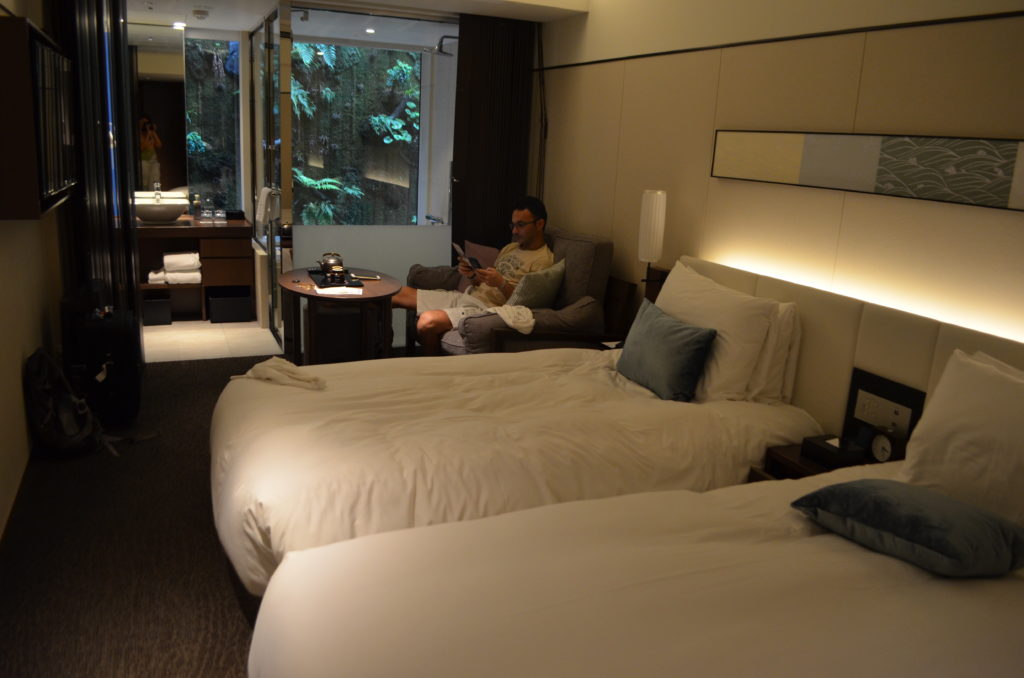
You have to search through the photos and opinions of Tripadvisor and Booking to find the best option. I recommend contrasting photos on Tripadvisor and booking, for getting the real feedback.
Don’t forget to check 3 things that influence the price: if it has windows, the number of square meters and that is for the number of people traveling (not just for one person).
I give you an example that will clarify what I say, the hotel Solaria Nishitetsu. en Kyoto. The basic rooms have windows, you could say yes, but they face a green wall and you don’t see natural light.
In a hotel where we stayed in Kanazawa, the basic rooms were very good but a bit small, fortunately, the hotel had good common areas and made up for it.
High level accommodation – from 120€
Here begin the good and very good, 3-star superior or 4-star hotels. There are magnificent things that can easily pass for a luxury hotel in any other country.
In general, the service is impeccable and very high, and the services of the rooms are as well.
Attention, as in all the world, the more you are in the heart of a tourist area, the higher the prices. But there are so many offers, so you will surely find what suits your pocket.
Some examples:
Hotel Vischio Osaka is a new hotel and super well located if you arrive to Osakam and then you want to visit other cities because it is very close to the train station. An area full of shops and restaurants.
Hotel Kanazawa Sainoniwa : a 3-star hotel worth much more than that. My absolute favorite in Kanazawa. Impeccable service and breakfast included that make you discover so many things.
Luxury accommodation – from 250€
Luxury accommodation in Japan is a big word, you will have an irreproachable service and benefits.
Obviously, in this heading, I include the big international chains (IHG, Hilton, Marriott ..), which are a good option for a trip to Japan, due to a language issue. Overall in hotels, English is quite approximate, but in these chains, most of the staff speak English perfectly.
I have one of my favorites in Osaka, and it’s the Intercontinental Osaka near the station. Super comfortable to arrive when you enter the Osaka airport, and then move by train to other cities.
This section will also include Ryokan which is generally quite expensive, as much as 5 stars. Be very careful when choosing one, take a good look at the comments, the high price is not a guarantee of an excellent experience. Very good Ryokan has to be booked well in advance.
If your budget allows it, I recommend one that also serves exceptional Kaiseki cuisine; Shiraume. It is in an idyllic part of Kyoto. The prices are high but it is an experience; One night with exceptional dinner and breakfast costs 34,000 yen per person (about € 280 depending on the exchange rate).
5. How much does it cost to eat on a trip to Japan?
During a trip to Japan, food will be a central point, it is part of the discovery and a way to know the culture. You will be surprised to know that eating in Japan can be quite cheap. There is something for all tastes and pockets, but if you have a limited budget, don’t worry, you can enjoy and discover without going out of your limits.
There is a type of food in Japan that is quite expensive and in which you will definitely not be able to save money, it is Kaiseki cuisine. But it is worth all its weight in gold, it is a type of dinner that expresses all the Japanese culture and that is commonly prepared in Ryokan. The experience (I consider it an experience, more than a meal) includes several dishes with small portions, which are served following traditional rites. If you want to invest in a single expensive meal, invest in this one. Prices for a dinner of this type start at € 80 per person.
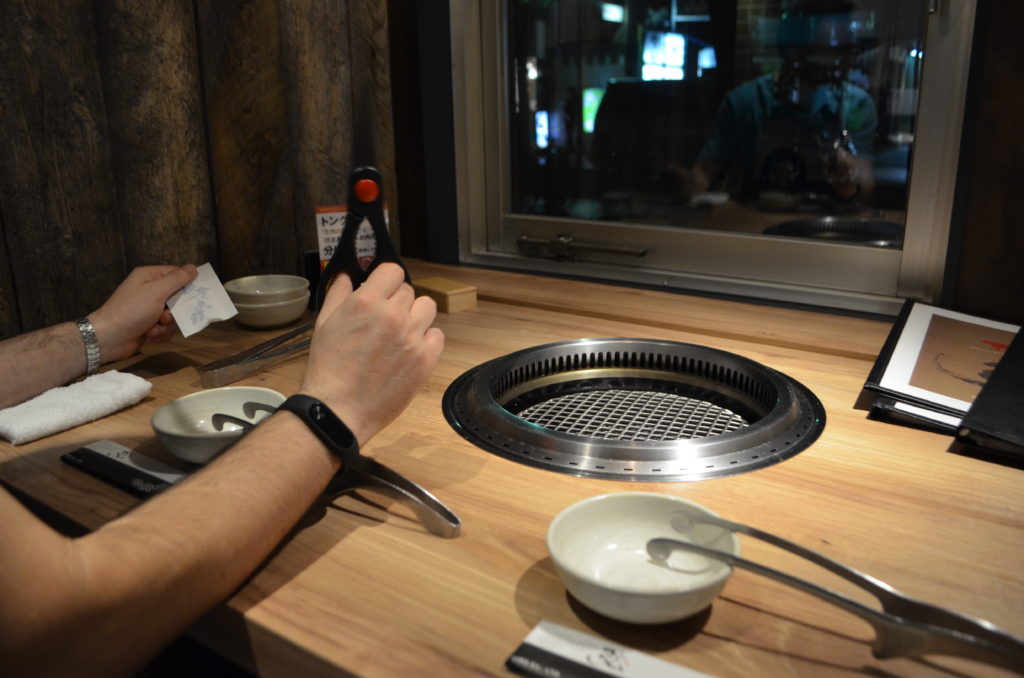
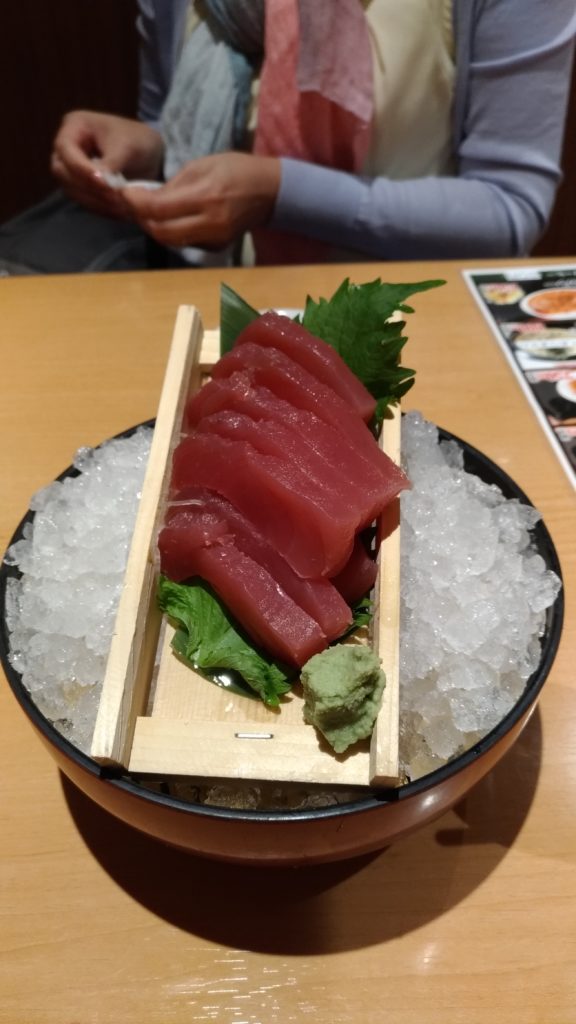
Take the opportunity to eat the exquisite Japanese Wagyu meat; There are several restaurants that allow you to taste the best cuts. But if you search well you can find those that offer dinners from € 35 per person; like the Yakiniku Hiro chain in Kyoto. Yakiniku means grilled meat. In fact, in this restaurant, each table has a small built-in grill; in which you will cook the cuts you request yourself.
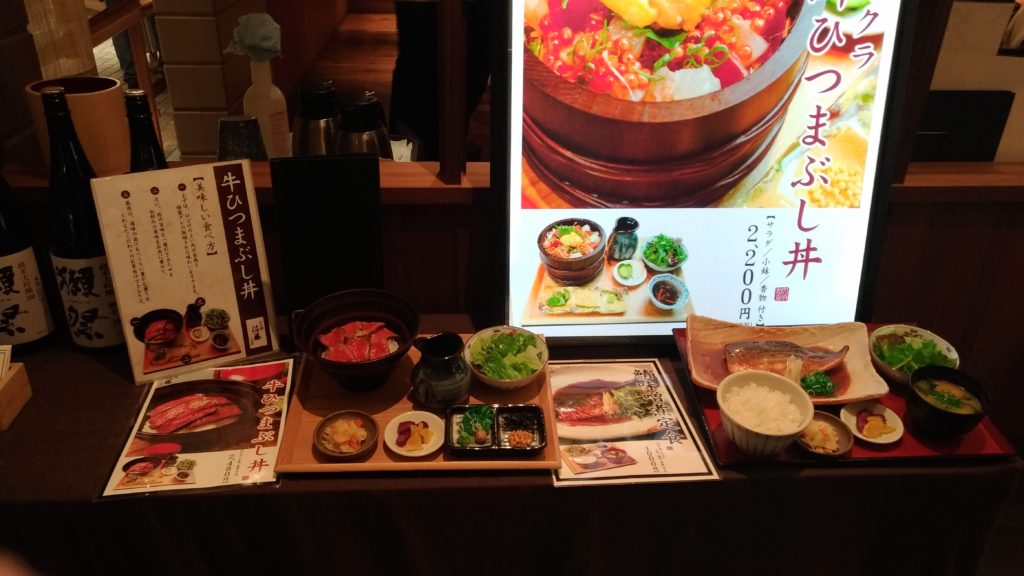
Explore the fast food fairs on the last levels and in the underground levels (identified with B in the directories) of the large shopping centers. There are infinities of places to eat and at cheaper prices, starting at € 10 per person. You really will find all kinds of food in these places; and there are very good things, others less interesting; but the variety is great and you will find excellent food. You will also see famous food modeled in plastic.
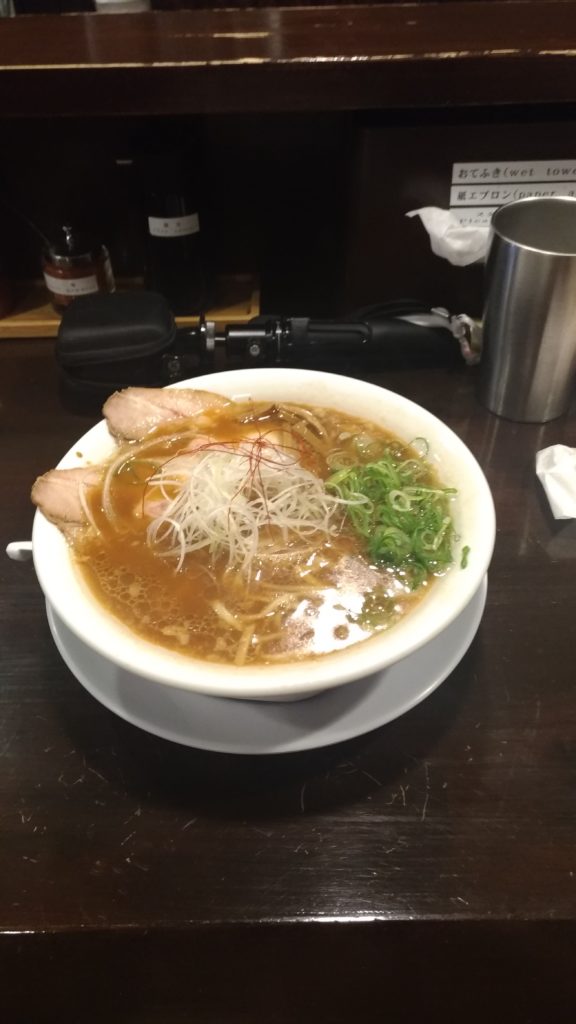
Eating in specialized places. In Japan, it is very common to find very small restaurants that are specialized in just one type of dish. This will be a guarantee of eating well and often at a good price. We ate at one specialized in Ramén, which did not disappoint and we spent only € 10 per person. There are for only Yakitori; Sushi and Sashimi, or Tempura. Anyway, a lot to choose from.
Opt for supermarkets. They have a lot of prepared food and you can try so many great quality things at very low prices, including sashimi. Prices start at € 2 or € 3 per plate. One tip is that supermarkets lower the prices of many dishes prepared fresh about an hour before closing. There are many people who recommend the Seven Eleven, I am not a fan, and many other supermarkets have better things.